How about some quantum news to make Tax Day go down easier?
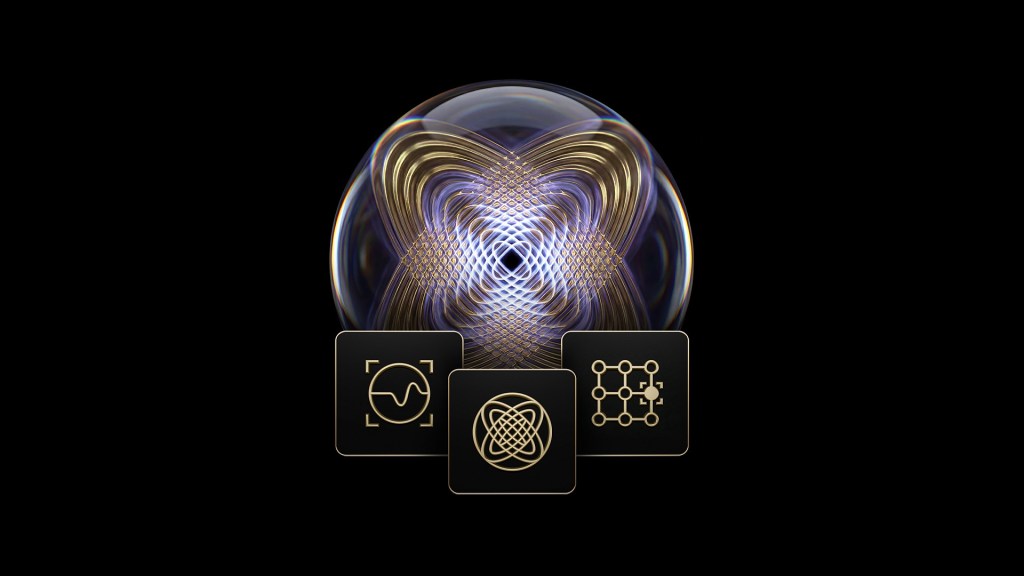
Nvidia yesterday announced a family of open source quantum AI models called Ising after mathematical models created by the famed German physicist Ernst Ising, who I now understand did not pronounce his name in a way that encourages fun headlines. (I’m going to leave it up there anyway.)
This is the latest move in the evolution of an increasingly synergistic relationship between quantum and AI. Just as quantum computing can improve AI model training and potentially reduce AI power consumption, AI can speed up quantum programming.
As usually happens with Nvidia’s quantum-related announcements, this one appeared to fuel a big jump across the board in quantum stock values yesterday.
Ising models work with the Nvidia CUDA-Q quantum programming platform and NVQLink QPU-GPU inteconnects, and aim to streamline quantum processor calibration and quantum error correction.
From the press release: “Ising models run the world’s best quantum processor calibration and enable researchers to tackle much larger, more complex problems with quantum computers by delivering up to 2.5x faster performance and 3x higher accuracy for the decoding process needed for quantum error correction.”
Nvidia CEO Jensen Huang added, “AI is essential to making quantum computing practical. “With Ising, AI becomes the control plane — the operating system of quantum machines — transforming fragile qubits to scalable and reliable quantum-GPU systems.”
The new models include:
- Ising Calibration: A vision language model that can rapidly interpret and react to measurements from quantum processors. This enables AI agents to automate continuous calibration, reducing the time needed from days to hours.
- Ising Decoding: Two variants of a 3D convolutional neural network model — optimized for either speed or accuracy — to perform real-time decoding for quantum error correction. Ising Decoding models are up to 2.5x faster and 3x more accurate than pyMatching, the current open source industry standard.
Nvidia said companies and institutions already using Ising Calibration include Atom Computing, Academia Sinica, EeroQ, Conductor Quantum, Fermi National Accelerator Laboratory, Harvard John A. Paulson School of Engineering and Applied Sciences, Infleqtion, IonQ, IQM Quantum Computers, Lawrence Berkeley National Laboratory’s Advanced Quantum Testbed, Q-CTRL and the U.K. National Physical Laboratory (NPL). Meanwhile, Ising Decoding is being deployed by Cornell University, EdenCode, Infleqtion, IQM Quantum Computers, Quantum Elements, Sandia National Laboratories, SEEQC, University of California San Diego, UC Santa Barbara, University of Chicago, University of Southern California and Yonsei University.
Nvidia said these models are part of “a cookbook of quantum computing workflows and training data along with NVIDIA NIM microservices, equipping developers to fine-tune models for specific hardware architectures and use cases with minimal setup.”
There is a little bit of a narrative out there suggesting that Nvidia has just dropped something akin to the last piece of the puzzle for quantum computing to really work. I don’t know about that. Adding open source tools to everything Nvidia already has provided certainly will help developers and researchers negotiate the thorny and complex issues they encounter on a daily basis to get quantum machines, experiments, and applications up and running. But, it’s also true that things like error correction, calibration, and control are getting better with contributions from many companies–and it’s an ongoing, unfinished process.
Image source: Nvidia
Quantum News Nexus is a site from freelance writer and editor Dan O’Shea that covers quantum computing, quantum sensing, quantum networking, quantum-safe security, and more. You can find him on X @QuantumNewsGuy and doshea14@gmail.com.





Leave a Reply