Fault-tolerant quantum computing is no longer a dot on the horizon.
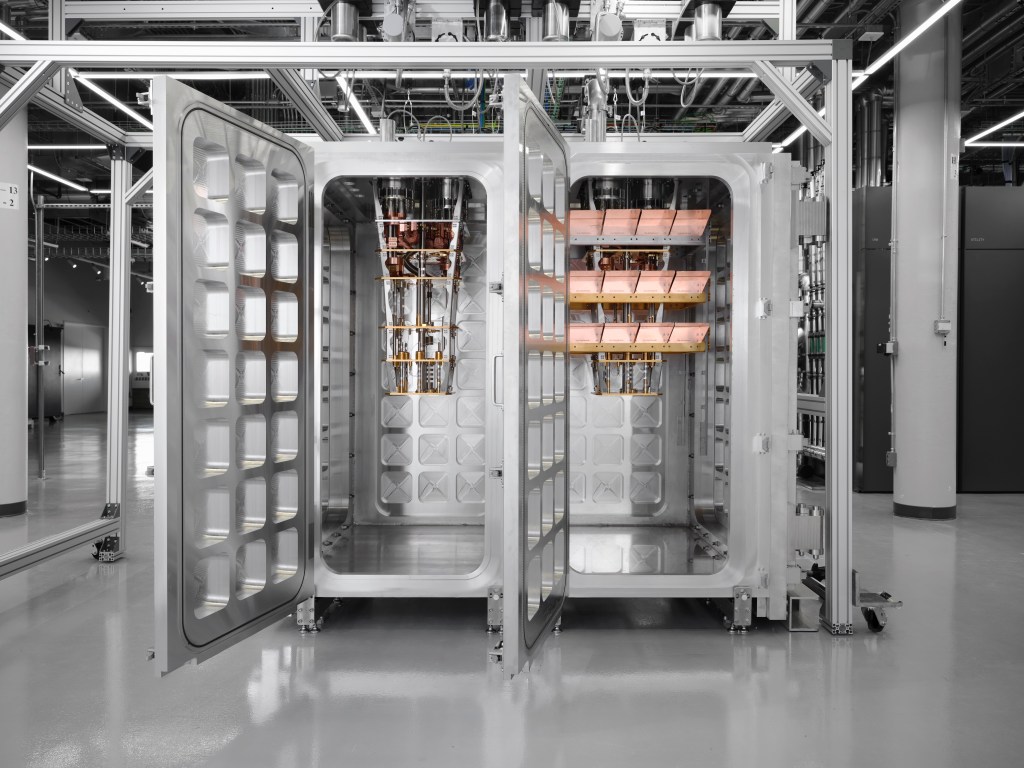
IBM just reminded everyone that it expects to deliver its first fault-tolerant quantum computer (FTQC) sometime in 2029 in the form of IBM Quantum Starling, and announced a major step toward that goal by joining and cooling down two modular cryogenic units into a single environment.
This is a big step toward linking many–potentially hundreds of QPUs together–by connecting cryogenic modules together in a tight row, forming the basis for a much larger quantum computing system. By the time Starling debuts, IBM expects that each cryogenic module will house thousands of qubits.
Each boxy 8-ft-tall unit is smaller than the cylindrical design IBM has used in the past, but actually are capable of holding more wiring than the old fridges, IBM said.
The next step on the roadmap will come later this year, as IBM plans to install its 120-qubit Nighthawk processors into the cryogenic modules and expand operational performance testing. Next year will be a big year for IBM’s “L-coupler” technology–which it has been talking about for a couple of years as a QPU interconnect solution–as the company aims to use L-couplers to link multiple processors into a larger quantum computer with at least 1,000 programmable qubits.
IBM’s 2029 FTQC goal has it at the leading edge of the FTQC timeline, with a number of other companies expecting to deliver FTQCs in 2030 and beyond. Will IBM be the first? That remains to be seen. QuEra Computing recently claimed it will have an FTQC available on Amazon Braket in 2028. Whenever a company does claim to finally have an FTQC ready, that announcement is sure to draw a lot of “well, not really…” and “yeah, but…” commentary. Fun times ahead.
Image source: IBM
Quantum News Nexus is a site from freelance writer and editor Dan O’Shea that covers quantum computing, quantum sensing, quantum networking, quantum-safe security, and more. You can find him on X @QuantumNewsGuy and doshea14@gmail.com.




 Quantum News Nexus
Leave a comment