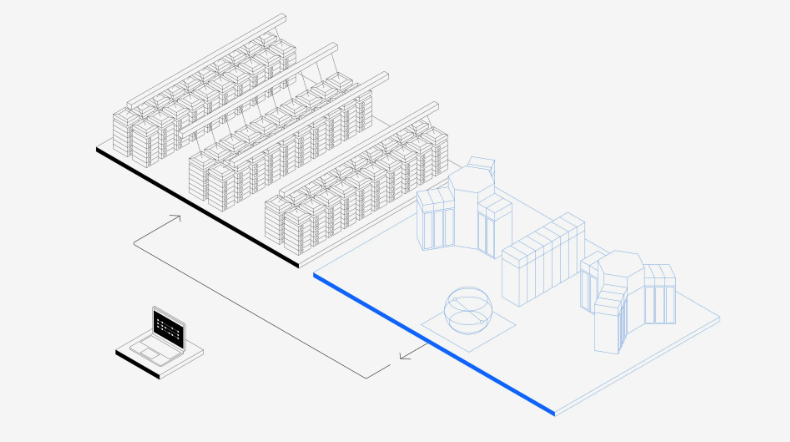
We’re still a few years away from fault-tolerant quantum computing, and in the interim hybrid quantum-classical computing continues to advance, particularly in the area of supercomputing, where the next few years could be defined as the quantum-centric supercomputing era.
Whereas hybrid quantum-classical usually involves a QPU as a task-focused accelerator to a GPU or CPU, or uses the classical processors to validate what the QPU is doing, quantum-centric supercomputing calls for QPUs and GPUs and CPUs to become more tightly coupled via bridging technologies like Nvidia’s NVQLink or similar in the interest of creating integrated workflows and supporting instant feedback loops between quantum and classical machines.
Quantum computing and classical computing players such as IBM, Nvidia, QuEra Computing, IonQ. Fujitsu, and Orca Computing, among others, have been working toward quantum-centric supercomputing for the last couple years. Some may argue the trend already reached an inflection point last fall with Nvidia’s unveiling of NVQLink, but the movement is getting another big nudge forward this week.
The first evidence of that was a commentary published by the bi-partisan, non-profit Center for Strategic and International Studies (CSIS), which outlined what the US needs to do to become a leader in quantum-centric supercomputing.
“Quantum-centric supercomputers exploit the strengths of both classical and quantum systems in an integrated workflow,” the authors wrote. “Quantum computers specialize in accelerators rather than stand-alone replacements for classical supercomputers. Classical computers manage data preparation and post-processing analysis, while quantum processors address classically intractable problems, including optimization and quantum simulations. This hybrid approach aims to expand the range of addressable problems and enhance the precision and efficiency of calculations. When supercomputers are tightly integrated and colocated with quantum devices, classical systems can apply real-time feedback loops, error correction, and noise reduction for quantum computers. This greatly improves result reliability.”
That passage eloquently explains what quantum-centric supercomputing is, and what can be gained from it. It also set the stage for an announcement just three days later from IBM, as the quantum computing pioneer unveiled its first quantum‑centric supercomputing reference architecture, which the company described as a new blueprint showing how QPUs “can work alongside GPUs and CPUs – across on‑premises systems, research centers, and the cloud – in order to tackle scientific challenges that no single computing approach can solve on its own.”
IBM’s announcement added that the new framework “combines quantum hardware with powerful classical infrastructure, including CPU and GPU clusters, high‑speed networking, and shared storage, to support computationally intensive workloads and algorithms research… On top of this foundation, IBM’s approach enables coordinated workflows that span quantum and classical computing. Integrated orchestration and open software frameworks, including Qiskit, allow developers and scientists to access quantum capabilities through familiar tools and workflows—making it easier to apply quantum computing to problems in areas such as chemistry, materials science, and optimization.”
IBM’s announcement goes on the provide examples of how IBM and its partners from the corporate world and research and academia (Cleveland Clinic, Japan’s RIKEN, ETH Zurich, Oxford University, Algorithmiq, the University of Chicago, and more) already are using IBM’s quantum-centric architectural blueprint to deliver results on a variety of projects. The latest announcement followed an IBM Research blog post from January that discussed how IBM and recent partner AMD were working to advance quantum-centric computing.
The CSIS commentary and IBM’s reference architecture should prove valuable documents in helping more organizations explore and leverage the value of quantum-centric supercomputing. Yes, it could be argued that Nvidia already has outlined a similar reference architecture through its own product announcements, partnerships, and quantum-centric supercomputing projects over the last couple of years, but the more the merrier.
Speaking of which, more US supercomputing sites need to get involved in quantum-centric supercomputing, which saw its earliest deployments in Japan and later at European supercomputing centers. The CSIS commentary observed, “The United States built its post–World War II research enterprise on federal investment in computing infrastructure, enabling decades of scientific discovery and innovation and creating the foundation for U.S. economic competitiveness and national security advantage. Quantum-centric supercomputing is the next generation of computing infrastructure. The United States should take strategic action to establish quantum-centric supercomputer ecosystems that will benefit from the most pragmatic approach to quantum computing for the next decade and shape the trajectory of quantum innovation for decades.”
Quantum News Nexus is a site from freelance writer and editor Dan O’Shea that covers quantum computing, quantum sensing, quantum networking, quantum-safe security, and more. You can find him on X @QuantumNewsGuy and doshea14@gmail.com.



 Quantum News Nexus
Leave a comment