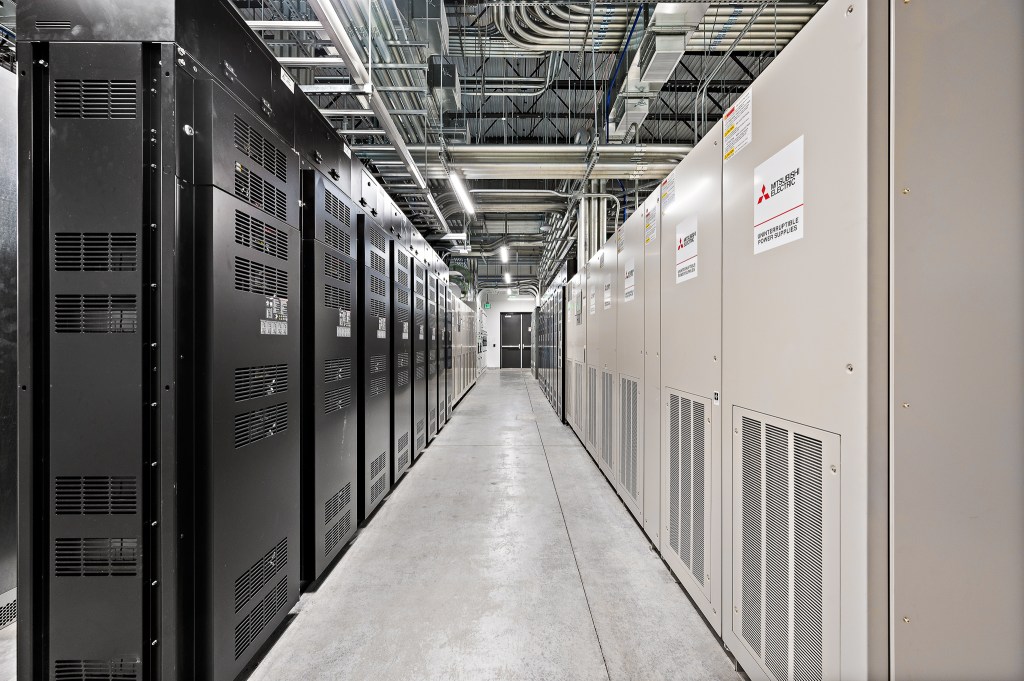
Quantum Corridor, one of the companies looking to build regional quantum networks in the US, teamed up with Toshiba International Corporation and Ciena to demonstrate secure quantum key distribution (QKD) over a live metropolitan fiber network connecting Tier III data centers along the Quantum Corridor network route spanning Northeastern Illinois and Northwestern Indiana.
Mark it down as another step toward building a quantum-safe Internet and eventually a fully Quantum Internet. QKD–using quantum mechanics-based approaches for secure key exchange–has been around for a long time. The US Defense Advanced Research Projects Agency demonstrated a small-scale QKD network more than 20 years ago, and research institute Battelle built a QKD network in Ohio way back in 2013. More recently, China has been widely observed as leading the charge with QKD and quantum networks in general, though there also have been numerous QKD efforts elsewhere across Asia and Europe–many of them involving Toshiba, which has been working on QKD research and projects with partners like BT, JPMorgan Chase, and Ciena for many years.
Additionally, IonQ is busily leveraging its acquisitions of Skyloom, Capella Space, Qubitekk, and ID Quantique in a plan to build a space-based QKD network, an idea also being pursued by public sector space agencies like the ESA and NASA. Back on the ground and in the US, EPB Quantum in Chattanooga, Tennessee, has been touted as the first commercial quantum network with QKD capabilities, but Quantum Corridor, telecom giants Verizon and Zayo, and a couple other parties are making progress.
That brings us back to Indianapolis-based Quantum Corridor, whose QKD implementation was conducted over commercial fiber network infrastructure spanning from Chicago’s ORD 10 Data Center at 350 E. Cermak Rd. near the city’s McCormick Place convention center to the Digital Crossroad Data Center at 100 Digital Crossroad Drive in Hammond, Indiana. The experiment–a first in QKD delivery across state lines, according to a press release–validated the use of Toshiba’s multiplexed QKD technology, which it demonstrated with NEC earlier this year, and Ciena’s high-speed coherent transport systems “to deliver continuous, secure key generation and high-throughput encryption across a 21.8-km (13.5 miles) segment of Quantum Corridor’s live high-capacity optical network.”
A bit more detail from the release: “Using Toshiba’s ETSI-compliant QKD systems, the network achieved secure key rates averaging 1,500 kbps, far exceeding typical field expectations. These quantum-generated keys were seamlessly integrated into Ciena Waveserver 5 800G coherent encryption modules, which provided AES-256-GCM encryption. The FIPS 140-3 Level 2 certified solution securely obtained a fresh set of QKD keys every 90 seconds, showcasing the interoperability and scalability of quantum-secured transport in a commercial setting.”
The companies added that “the system maintained 100% line-rate throughput and zero packet loss over 48 hours of continuous encrypted traffic, demonstrating the readiness of QKD for real-world, high-availability network operations—offering nearly instantaneous and unhackable quantum communications for sensitive data in finance, healthcare, defense and government applications.”
The collaboration between Quantum Corridor and Toshiba grew out of the Chicago Quantum Exchange partnership program.
“It is extremely exciting to witness QKD deployed and functioning on a fully commercial network under real world conditions,” said Dr. Michael Manfra, Director of the Purdue University Quantum Science and Engineering Institute, in a statement from the release. “This achievement marks a significant transitioning towards commercially viable secure quantum key distribution across state boundaries in a major metropolitan center. This result from Quantum Corridor and Toshiba bodes well for further commercial expansion in the Midwest Quantum heartland.”
QKD has been pegged as a big growth market the next several years by IQT Research, Juniper Research, and others, though some hurdles remain in place, such as the overall expense of deploying the technology and the limited availability of quantum repeaters that could help extend QKD signals over much longer distances. Still, enterprises across many industries finally might be starting to acknowledge the pressing need to adopt quantum-safe security, which could make the coming years very busy for quantum network operators and their technology partners.
Image: Inside the Hammond, Indiana, data center involved in QKD implementation by Quantum Corridor and Toshiba. (Source: Quantum Corridor)
Quantum News Nexus is a site from freelance writer and editor Dan O’Shea that covers quantum computing, quantum sensing, quantum networking, quantum-safe security, and more. You can find him on X @QuantumNewsGuy and doshea14@gmail.com.



 Quantum News Nexus
Leave a comment