Three long-time quantum researchers just won the Nobel Prize in Physics in recognition of their bodies of work and experiments carried out 40 years ago that were significant in proving the effects of quantum mechanics.
When I started this site, I made a conscious decision to limit my coverage of research breakthroughs and other news from the academic arena. The quantum technology sector’s commercial hopes are inextricably tied to such breakthroughs and milestones, and universities have spun out many quantum start-ups. Even more than a decade into the industry’s commercial evolution, we still see researchers holding top posts at many firms, and even some company founders returning to their academic work after handing their creations over to more corporate-minded guardians (IonQ’s co-founders being a prime example, though not the only one).
In fact there is still so much research news on a weekly–even daily–basis, I didn’t want Quantum News Nexus to be just another blog with a laundry list of links to whatever milestones are being passed at universities and corporate R&D departments around the world. A lot of other sites do that very well. Instead, I was more interested in exploring commercial news and trends of the sector, and documenting some of the fits and starts that quantum, like any emerging market, is still experiencing.
Having said all that, achievements in academic and research circles continue to have direct, real-world impact on the quantum market. Here’s how the Nobel Prize news could influence the business of quantum:
Awareness: Not that the sector needs it, as general public and investor recognition of quantum technology’s potential seems to have exploded in recent months. However, it’s fair to wonder if some people see quantum computing as something that will show up in the next iPhone, Chromebook, or Amazon Echo, which–it ain’t that friends. The Nobel Prize could help more people understand what quantum is, how long the research community has been working on it, how long the corporate community has been developing it, and how much longer we have to go before it has broad commercial impact.
It also could alert more people to the fact that quantum computers and quantum annealing systems are things that already exist, that already are are being sold, and that already are being put to work on today’s business challenges.
Education and Employment: As the quantum sector continues to grow, where will the next generation of researchers and business leaders come from? That has been a concern for at least half a decade, both a practical concern and, for the US and a few other countries, a geopolitical concern. This Nobel Prize turns a spotlight onto the long and fruitful careers of three legendary researchers–Drs. John Clarke, Michel H. Devoret, and John M. Martinis. Martinis was a key figure in Google’s famous 2019 claim about quantum supremacy, and Devoret is currently chief scientist of quantum hardware at Google Quantum AI. Clarke is referred to in the New York Times by a colleague as “a godfather of superconducting electronics.” Hopefully, this will inspire others to pursue degrees and post-graduate work in quantum-relevant fields, and will entice more working tech professionals to look for their own entry points into the industry.
Google Quantum AI: As mentioned, Martinis was a pioneer in the big G’s initial quantum efforts, and Devoret plays a key role now. In the last five years following the quantum supremacy claim, GCAI has not tooted its own horn too energetically, occasionally putting out news about research achievements and its evolving Willow chip (It did celebrate Devoret’s win). The Goog has made the wise choice to not engage in the over-hyping of the sector (though the mere utterance of the words “quantum supremacy” inspired many others to do so).
The Nobel Prize news certainly will turn a lot of heads to look into exactly what GCAI is up to at its campus out in Santa Barbara, California, and what effect it could have on its parent company’s bottom line in the years to come. GCAI may even choose to strut a little more about its role in the evolving space.
The superconducting technology GCAI plays with has a longer development roadmap than some other quantum computing technologies, so I also have a feeling more people will start watching GCAI and other companies working with superconducting technology (IBM, Rigetti Computing, etc.) for news of potential acceleration down that roadmap.
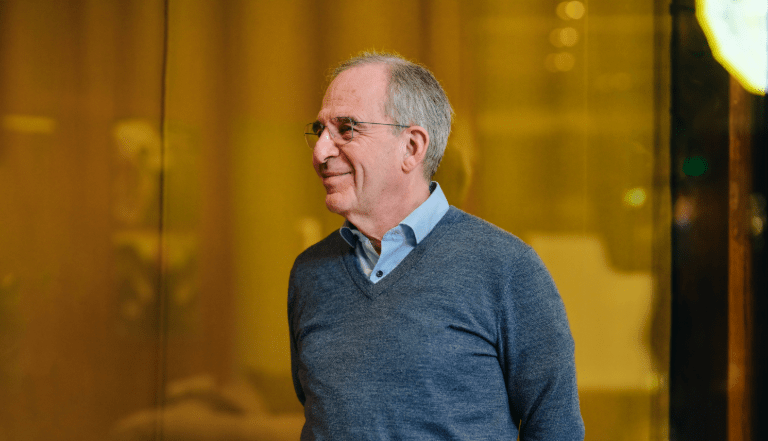
Image: Michel Devoret, Nobel Prize winner and Chief Scientist, Quantum Hardware, Google Quantum AI (Source: Google)


 Quantum News Nexus
Leave a comment